
Units
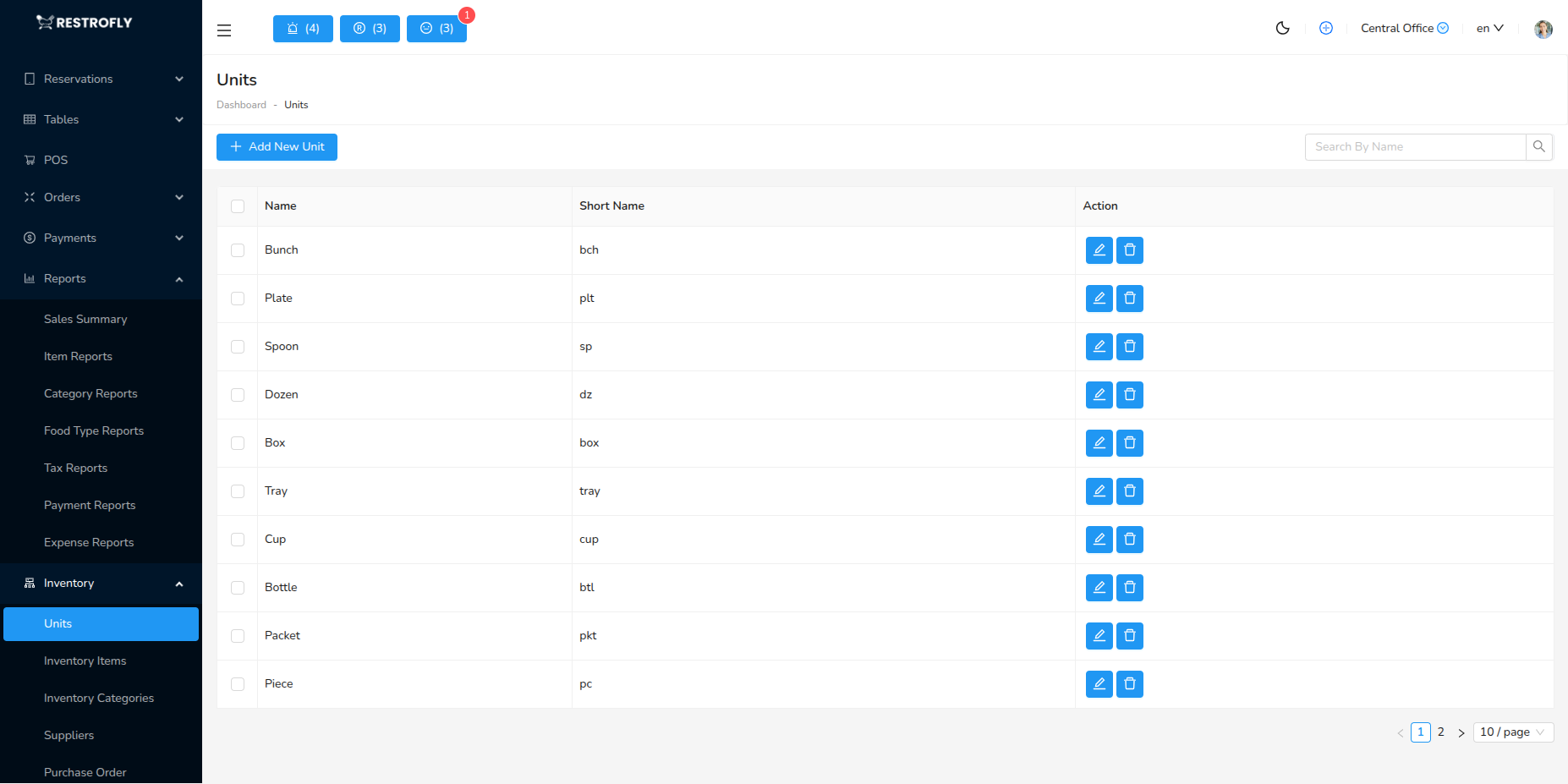
Define measurement units for inventory items. Navigate to Inventory → Units to manage measurement units.
Overview
Units define how inventory items are measured - kilograms, liters, pieces, etc. Essential for accurate inventory tracking and recipe costing.
Creating a Unit
Click Add Unit.
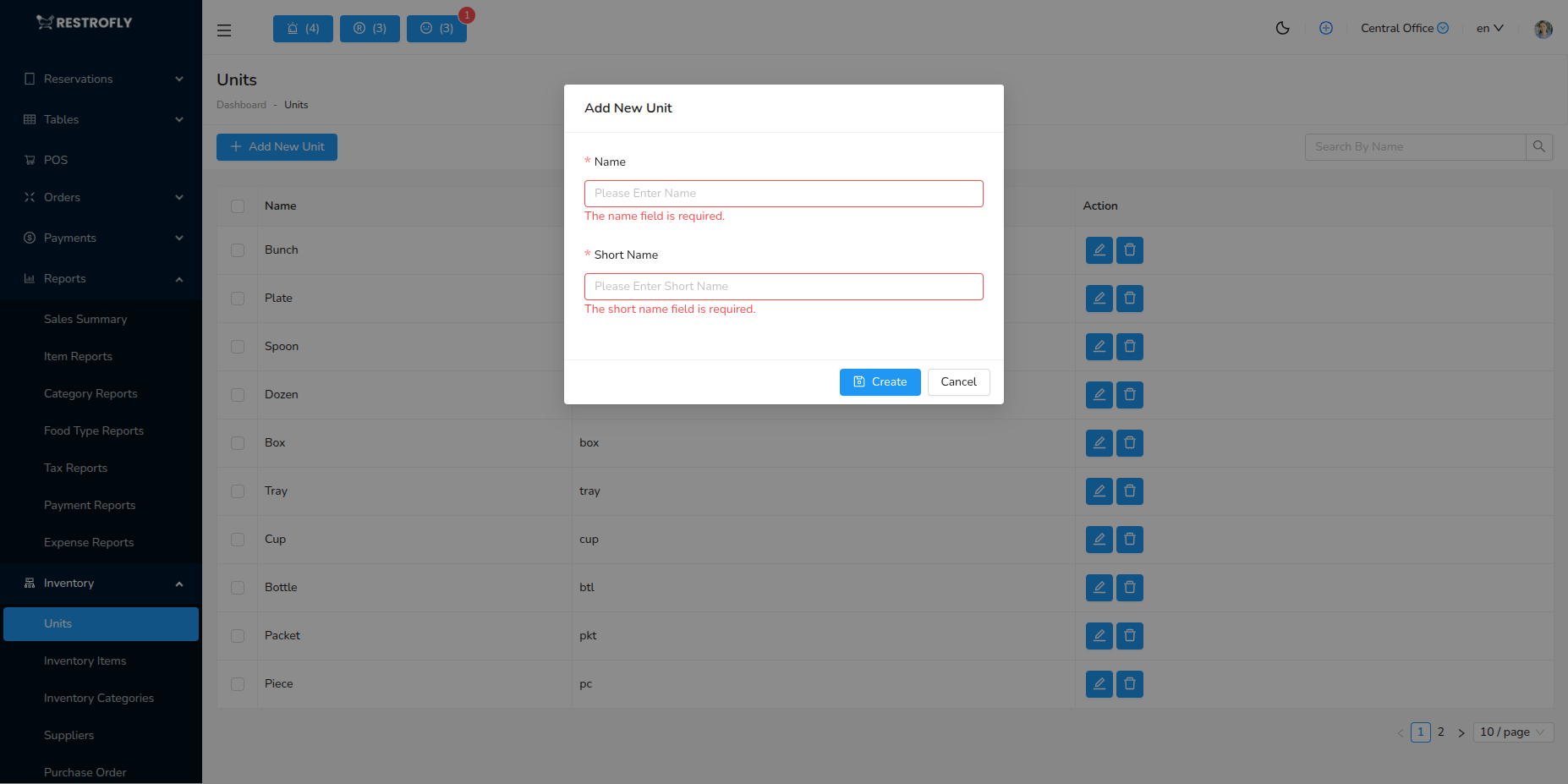
Name (Required): Unit name
Short Name (Required): Abbreviation (kg, L, pcs, oz, lb)
Common Units
Weight: Kilogram (kg), Gram (g), Pound (lb), Ounce (oz), Ton
Volume: Liter (L), Milliliter (ml), Gallon (gal), Quart (qt), Cup
Count: Piece (pcs), Dozen (doz), Box, Pack, Bag, Bottle, Can
Length: Meter (m), Centimeter (cm), Inch (in), Foot (ft)
Best Practices
Standard Units: Use standard measurement units, consistent with supplier invoices
Metric vs Imperial: Choose one system primarily, convert when necessary
Specific Units: "Large Eggs (dozen)" better than just "Eggs"
Consistency
Use the same units your suppliers use on invoices. Makes receiving inventory and entering data much faster and more accurate.